Access and Inclusion Model for
Pre-school Providers
The Access and Inclusion Model (AIM) is a programme of supports designed to ensure that children with disabilities can access the Early Childhood Care and Education (ECCE) Programme in mainstream pre-school settings. Its goal is to empower pre-school providers to deliver an inclusive pre-school experience, ensuring that every child can meaningfully participate in the ECCE Programme alongside their peers and can reap the benefits of quality early years care and education.
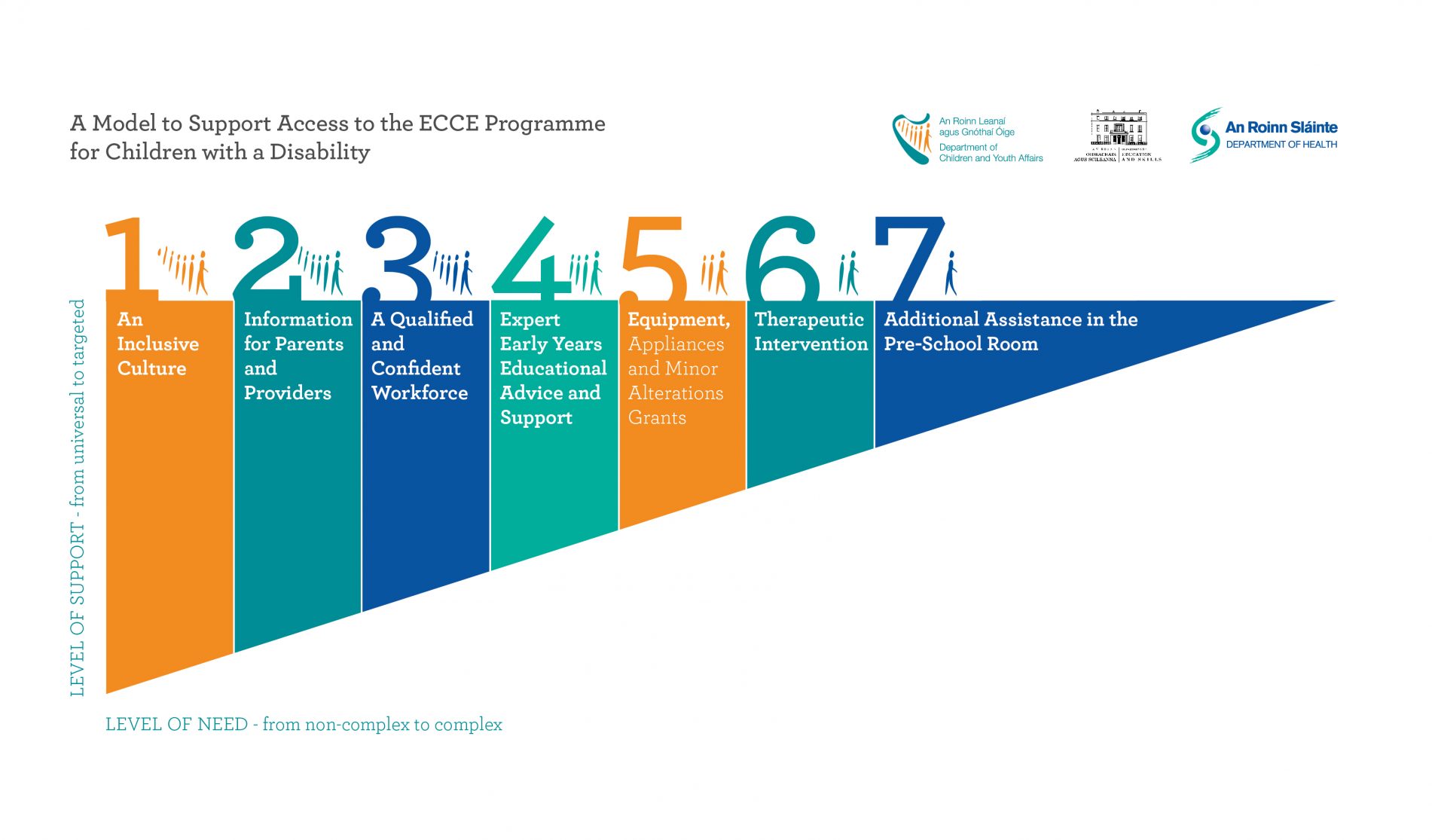
AIM is a child centred model of supports, involving seven levels of progressive support, moving from the universal to the targeted, based on the needs of the individual child and the pre-school setting. It will offer tailored, practical supports based on need and will not require a formal diagnosis of disability.
Universal Supports under AIM
Targeted Supports under AIM
Targeted Supports (Levels 4 – 7 of the Access and Inclusion Model)
The supports at levels 1 to 3, when appropriately developed, have been found internationally to be sufficient to support many children with disabilities. However, where a pre-school provider, in partnership with a parent or guardian, considers that some further additional support may be necessary to meet the needs of a particular child, they can apply for one or more of the following targeted supports:
- Expert advice, mentoring and support is available from a team of 60 specialists in early years care and education for children with disabilities. These experts, termed Early Years Specialists, are based in the Better Start National Early Years Quality Development Service.
- A scheme is available for the provision of specialised equipment, appliances and grants towards minor building alterations which are necessary to support a child’s participation in the ECCE Programme.
- Therapy services, which are critical to a child’s participation in the ECCE Programme, are available through AIM and will be provided by the HSE.
- Finally, where the above supports are not sufficient to meet the needs of a child, pre-school providers, in partnership with parents or guardians, can apply for additional capitation to fund extra support in the classroom or to enable the reduction of the staff to child ratio.
Getting Started and Accessing Supports
Where you have agreed to enrol a child in your pre-school and consider that you will need additional support to meet the needs of the child in an inclusive way, you can, in partnership with the parent, apply for supports under AIM.
The AIM application process, in advance of each new pre-school year, will open in May in order to enable the relevant supports to be put in place prior to the child commencing on the ECCE programme in the September. Please note that for some very specialised equipment more time is required.
A telephone support line is also available to you at the following contact (01) 511 7222 from 8am to 6pm Monday to Friday.
Applications can only be made with the full consent of the parent or guardian or carer. A copy of the parental consent form can be viewed here
This form should be printed and signed by the parent or guardian or carer and should then be uploaded and submitted with the completed online application. In providing consent for an application to be made, the parent is also providing consent for information on the application to be shared with relevant professionals involved in processing the application and providing supports under AIM (eg. Early Years Specialist, HSE occupational therapist, Pobal officials).
Where an application for supports has been made, Pobal will process the application and will inform both the parent and the pre-school provider of the decision reached. Where a pre-school provider, in partnership with a parent, is unhappy with the decision reached by Pobal, they can seek a review. More detail in relation to the process of decision making is available at www.pobal.ie.
AIM Supports



AIM Inclusive Play
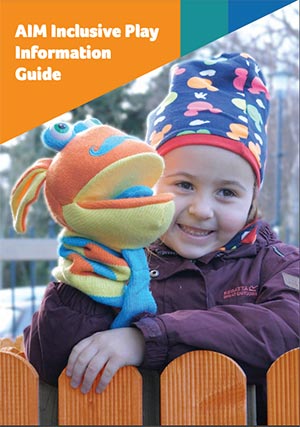
AIM Inclusive Play is a set of sensory and educational play resources to support inclusive practice within pre-school settings. This website supports the appropriate and effective use of these resources.
Leadership in INClusion Programme – LINC (for Childcare workers)
Programme Overview – The Leadership for INClusion in the Early Years programme is designed to support the inclusion of all children in Early Learning and Childcare. The course is fully funded by the Department of Children, Disability and Equality (DCDE) for educators working within Early Learning and Care settings. Graduates of the LINC Programme will be qualified to perform the role of Inclusion Coordinator within their Early Learning and Care Setting and will also be recognised for Lead Educator Status under the DCDE Qualification Guidelines.
The development of the programme is part of a government response to local, national and international demands for high quality education and training leading towards graduate pathways in the combined field of early childhood care and education (ECCE). The programme seeks to address the need for continuing professional development (CPD) in relation to the inclusion of all children.
Hanen and Lámh
Hanen Teacher Talk and Lámh Module One courses are organised by Better Start for ECCE services availing of AIM Supports. These courses are provided for preschool staff to build skills and confidence in relation to disability and inclusion.
Please see further information and upcoming dates below
Lámh
is a manual sign system used by children and adults with intellectual disability and communication needs in Ireland. Lámh signs are used to support communication.
Hanen
The Teacher Talk Training Series is designed to actively engage participants through discussions, small group activities, analysis of video examples and completion of practical Action Plans that participants take back to their classrooms.